ELX-MQTT Broker
A complete MQTT broker with a live web dashboard
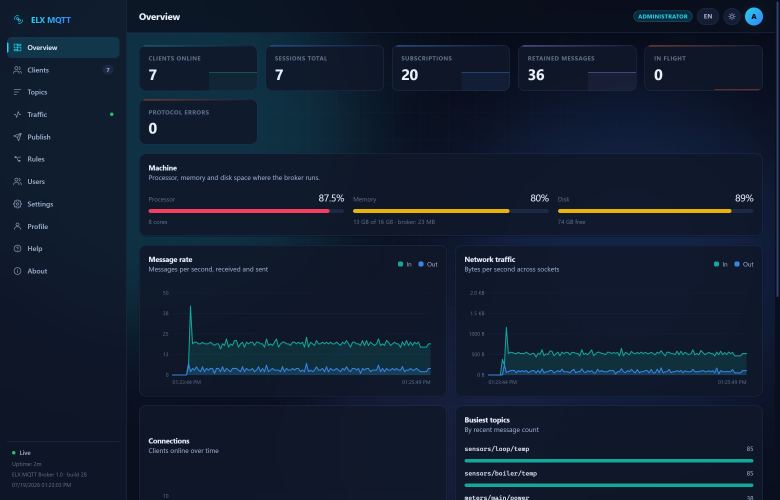
MQTT 3.1.1 and 5.0 implemented from scratch, with no third-party protocol libraries. A single binary that carries its own dashboard, storage and TLS: install it and it runs.
Automation · Controllers · Software
We work in industrial automation: we design controllers, write the firmware that runs on them, build server and desktop software, and make applications for mobile devices. The programs that grew out of that work are gathered under Solutions — each with its own page carrying a description, documentation and files to download.
Polling equipment over industrial buses, carrying the data into supervisory and building-automation systems, and commissioning and maintaining installations.
Developing controllers and modules for automation, and the firmware that runs on them — from the schematic to a working device on site.
Message brokers, protocol gateways, file storage, monitoring agents and private networks — the things that run on a server with nobody watching.
Tools for the commissioning engineer and for everyday work at a computer: terminals, viewers, diagnostics.
Android applications for our own server programs: reaching files, controlling and watching from a phone.
Protocol gateways, an MQTT broker and serial-port tooling
A complete MQTT broker with a live web dashboard
MQTT 3.1.1 and 5.0 implemented from scratch, with no third-party protocol libraries. A single binary that carries its own dashboard, storage and TLS: install it and it runs.
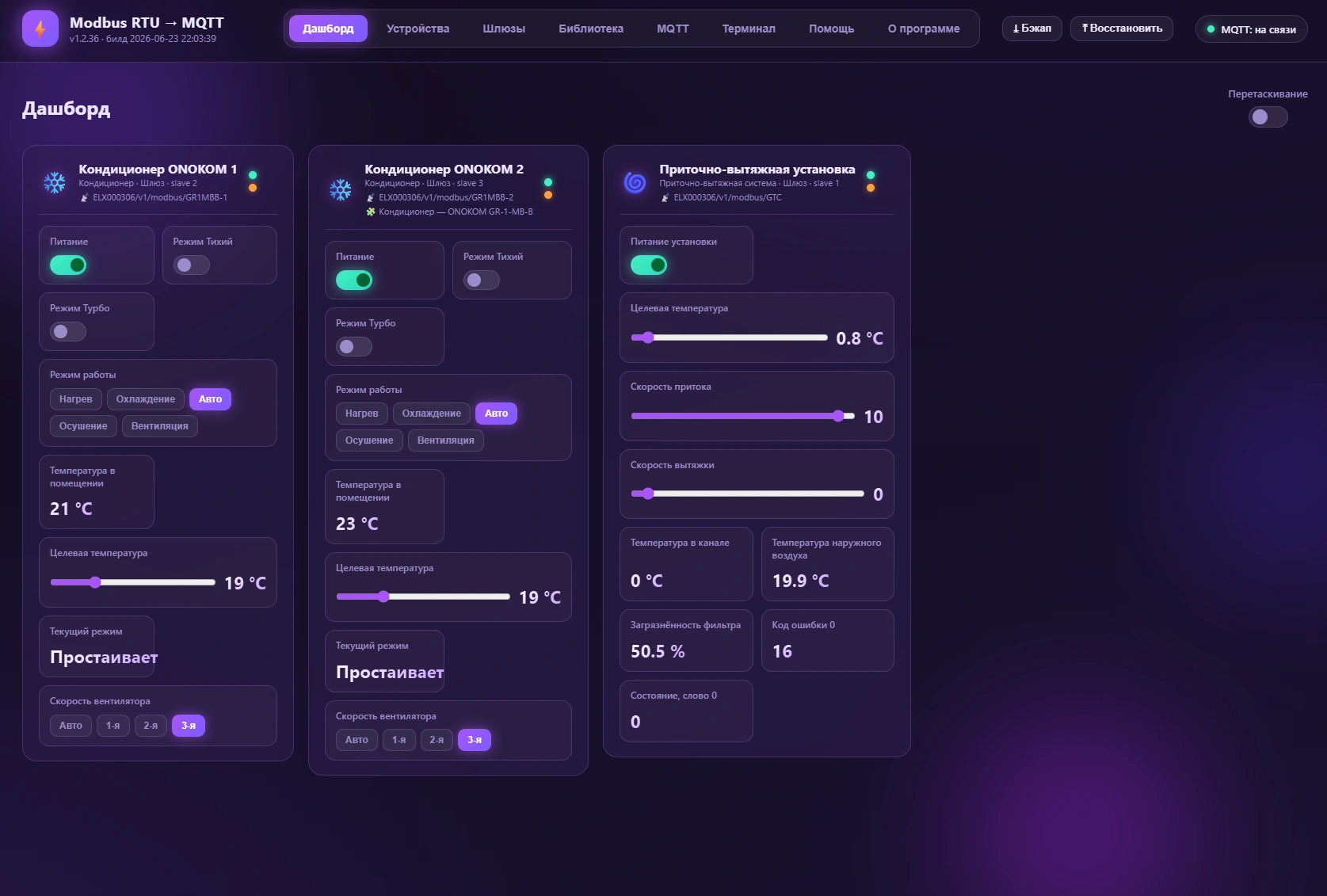
A bridge between the Modbus bus and an MQTT broker
Polls Modbus devices over Ethernet and the RS-485 serial bus, decodes the raw registers into real values, publishes them to MQTT and writes commands back. Configured entirely in the browser — there are no configuration files to edit.
A terminal for COM ports, raw TCP and TCP through an SSH tunnel
Four kinds of connection in one window, a tab for each: serial port, TCP client, TCP server, and TCP reached through an SSH gateway. Text, hexadecimal dump and frame parsing switch on the fly and redraw from the raw history, so nothing is lost by changing your mind.
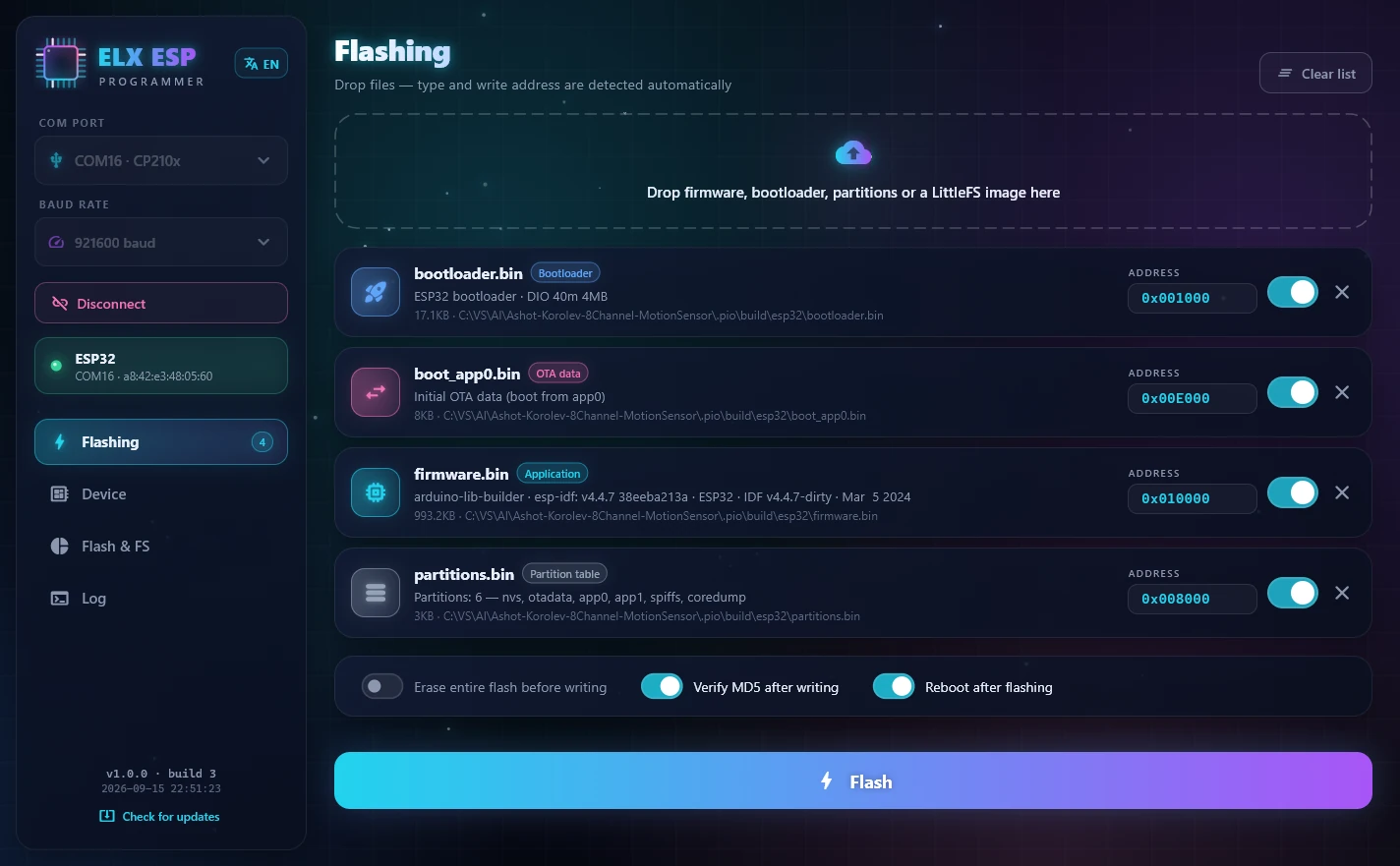
An ESP32 and ESP8266 flashing tool for Windows with its own bootloader protocol
Drop firmware, a bootloader, a partition table or a LittleFS image onto the window — the type and the address are worked out from the contents and the file name. The program identifies the connected chip — ESP32 or ESP8266 — and its flash, draws the flash map and shows the LittleFS files and NVS keys stored on the device, all without esptool or Python.
Private networks, remote control and a firewall that asks first
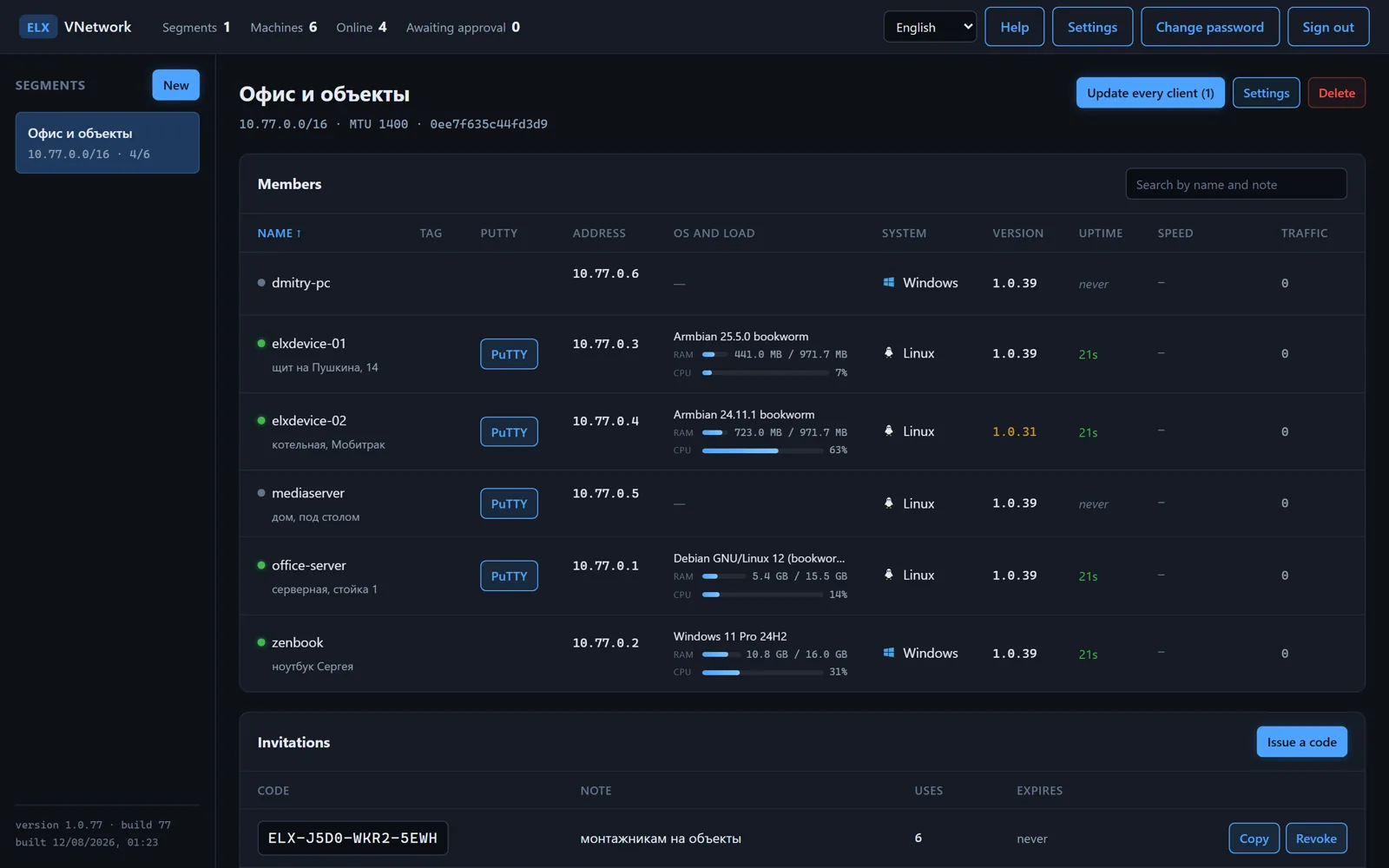
Your own local network, across the internet
Machines in different cities, each behind its own router, see each other as if they stood in one room: shared folders, network neighbourhood, printers, remote desktop, SSH. Nothing has to be configured on the routers — no port forwarding, no public address.
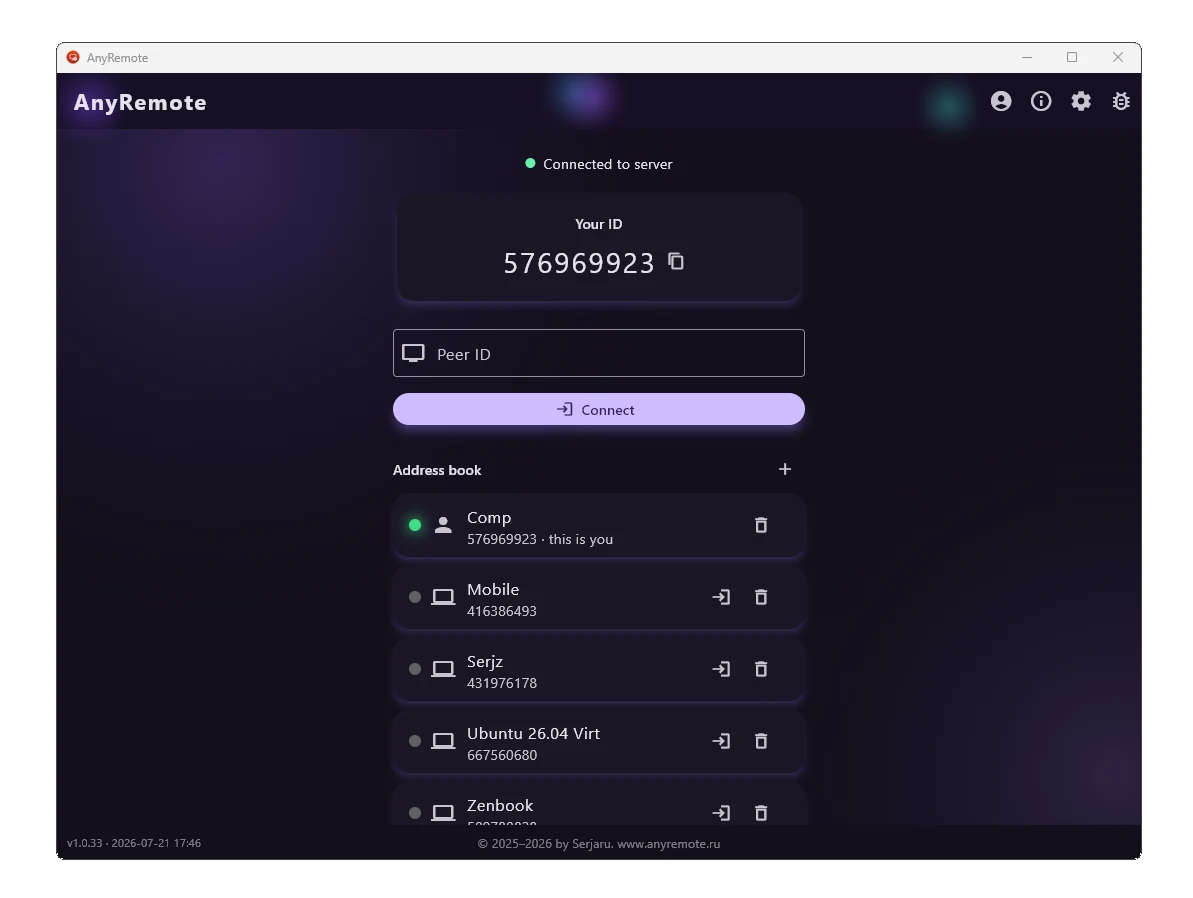
Remote desktop access from a browser or an app
Connect to a remote computer and take control of it: the screen arrives as video, the keyboard and mouse go back over the same encrypted connection, and files move in both directions. A nine-digit identifier is all the other side has to tell you.
See every connection, decide every one
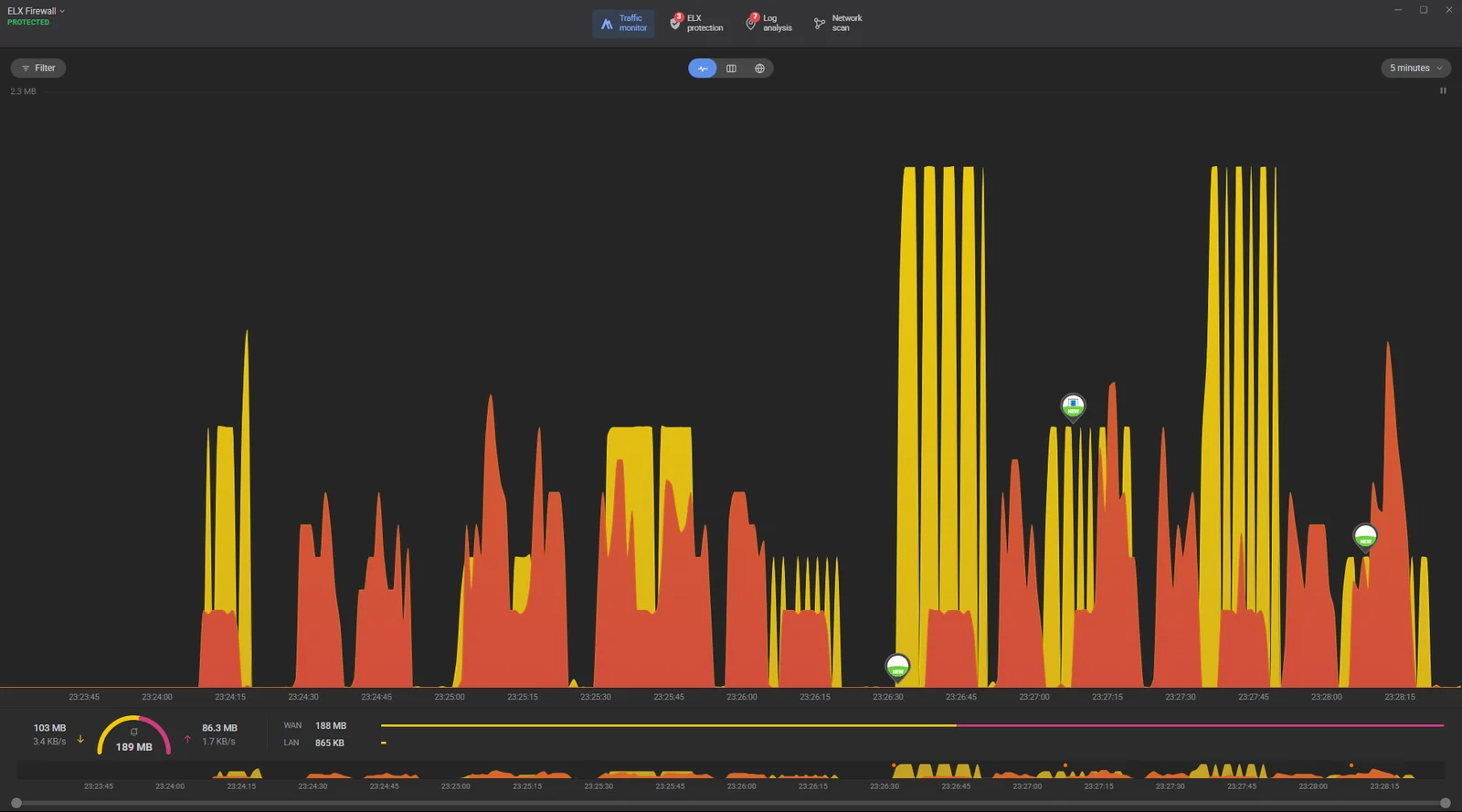
A network monitor and application firewall for Windows. It shows which program talks to which host, country and port — live and over time — and lets you allow or block each program, each direction and each address or port. In ask mode a new connection waits for your answer instead of failing, and your answer becomes either a decision for the whole program or a rule in an ordered list that is read top to bottom. The interface is available in nine languages.
Your own file cloud on your own server
A file cloud on a server you control
A browser interface with drag and drop, sharing by link and between users, and the same files over FTP, FTPS and WebDAV. Photos, video and music play in place, text files are edited in the browser, and everything lives in one SQLite file next to the binary.
Your file cloud in your pocket
The Android client for ELX-Cloud: files, favourites, public links, trash, your profile and automatic upload of the photographs you take. Administration deliberately stays in the browser — a phone is for using the storage, not for configuring the server.
What a Linux machine is doing right now, and what it did last week
What a Linux server is doing, and what it did last week
A monitoring agent with a web interface, history in SQLite and e-mail alerts. One executable with no dependencies: the front end is inside the binary and the database creates itself. On a four-year-old Celeron it costs about four per cent of one core and eleven megabytes of memory.
Small Windows programs that do one thing quickly
An image viewer that opens before you let go of the mouse
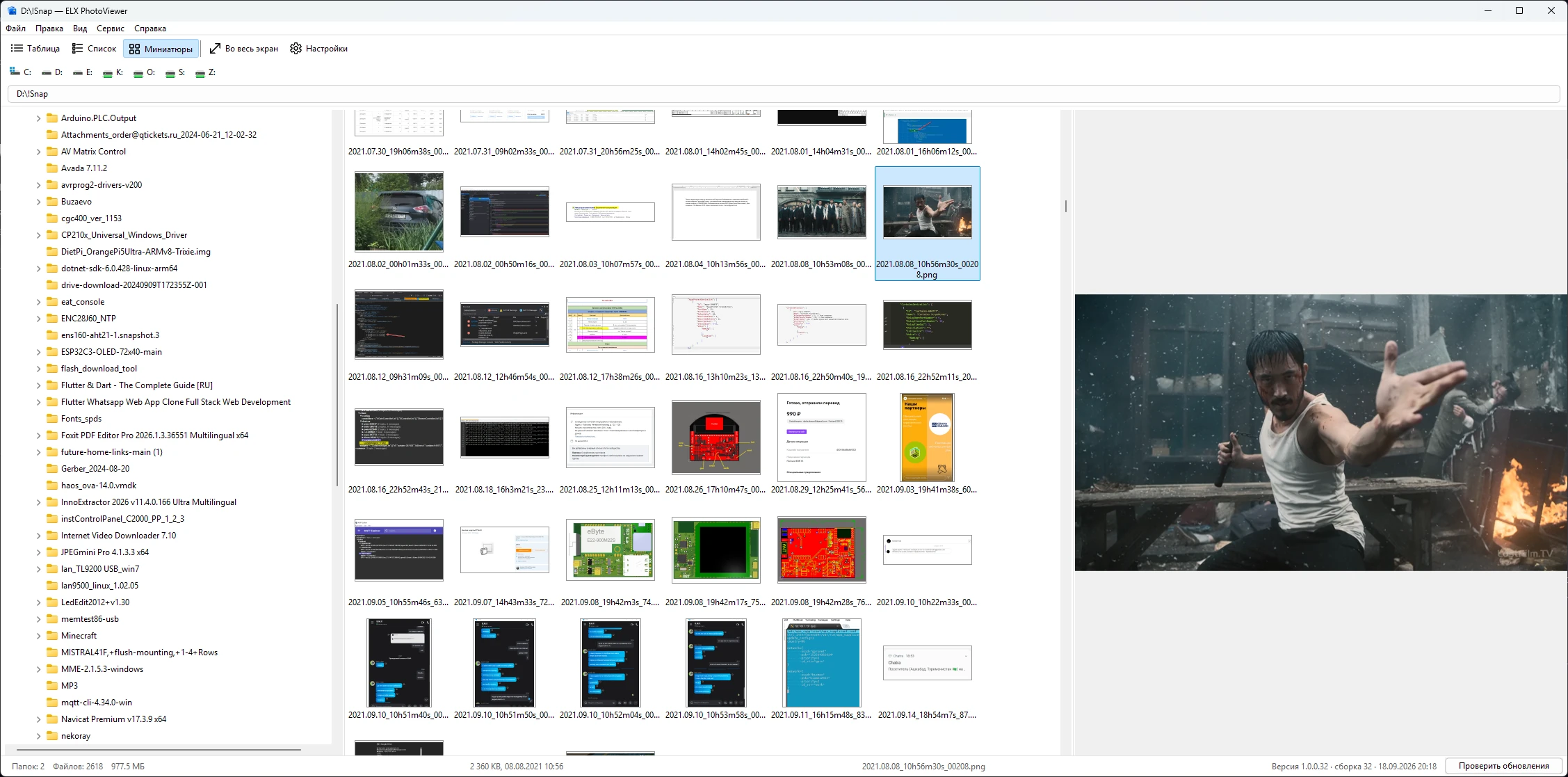
A file shell with a folder tree, a file list and a preview pane — and a full-screen mode that appears almost instantly when you double-click a picture in Explorer. Built on the Windows imaging API directly, with a photo editor and a video editor in the same installer and no separate runtime to install. Inspired by the classic ACDSee of the early 2000s: the same lightness and speed, on a modern foundation.
Hotkey, selection, editor, done
A screenshot utility for Windows that lives in the notification area: press the key, drag a rectangle, annotate it with arrows, highlighter, text and blur, then save it or copy it to the clipboard. Written against the Windows API directly, with no runtime and no UI framework underneath.
Which process is holding which port
The full socket table for Windows — TCP and UDP, IPv4 and IPv6 — with the process, its path and the Windows service behind each port. The same data as netstat, read directly through the system API and shown in a window you can search and sort.
Every project has its own page: what it does, how to install it and the files to download.
Browse solutions